

Art is not always something we create to explain life. Sometimes, it is something that helps us understand life after it happens.
-Tiyasa

The Art
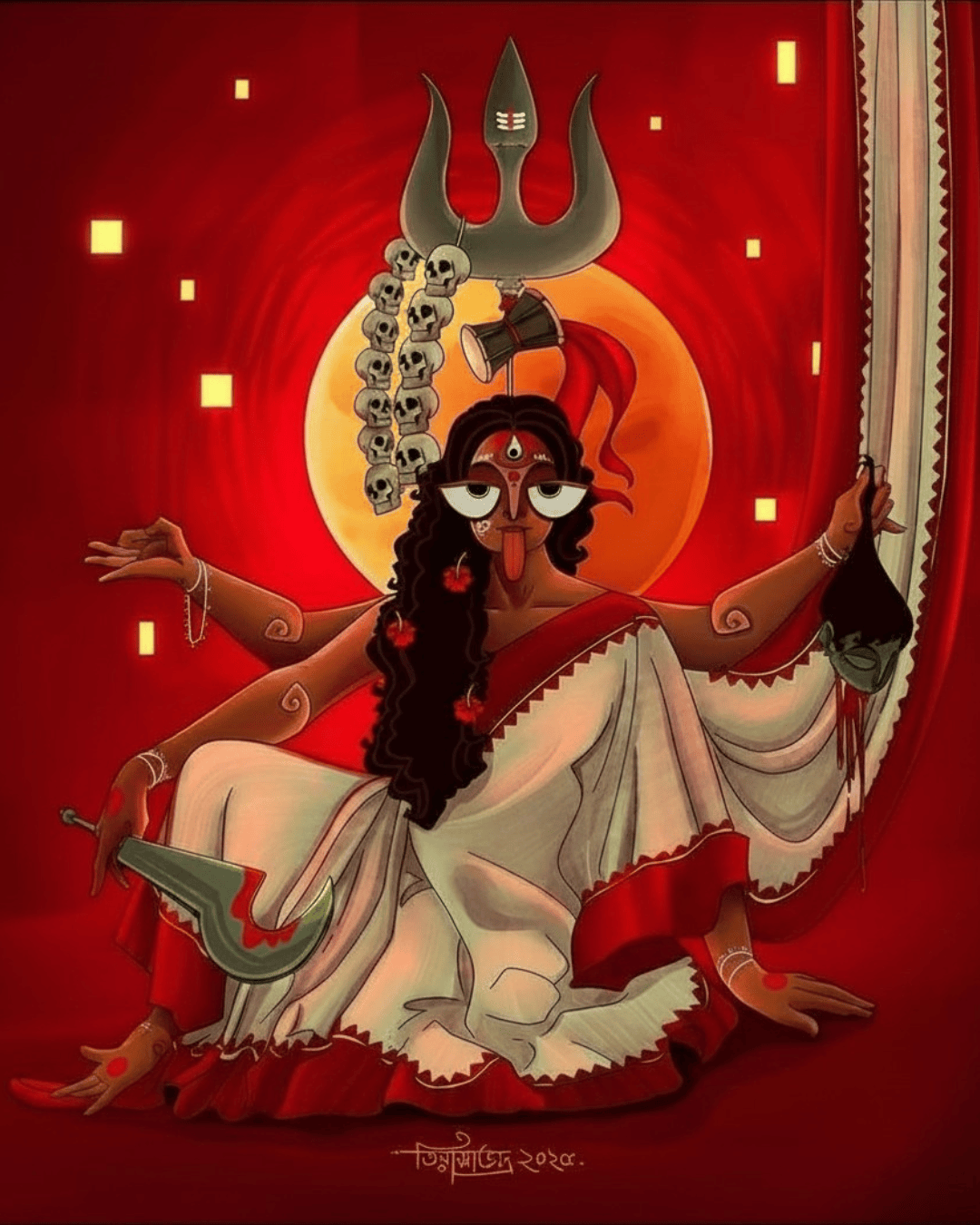
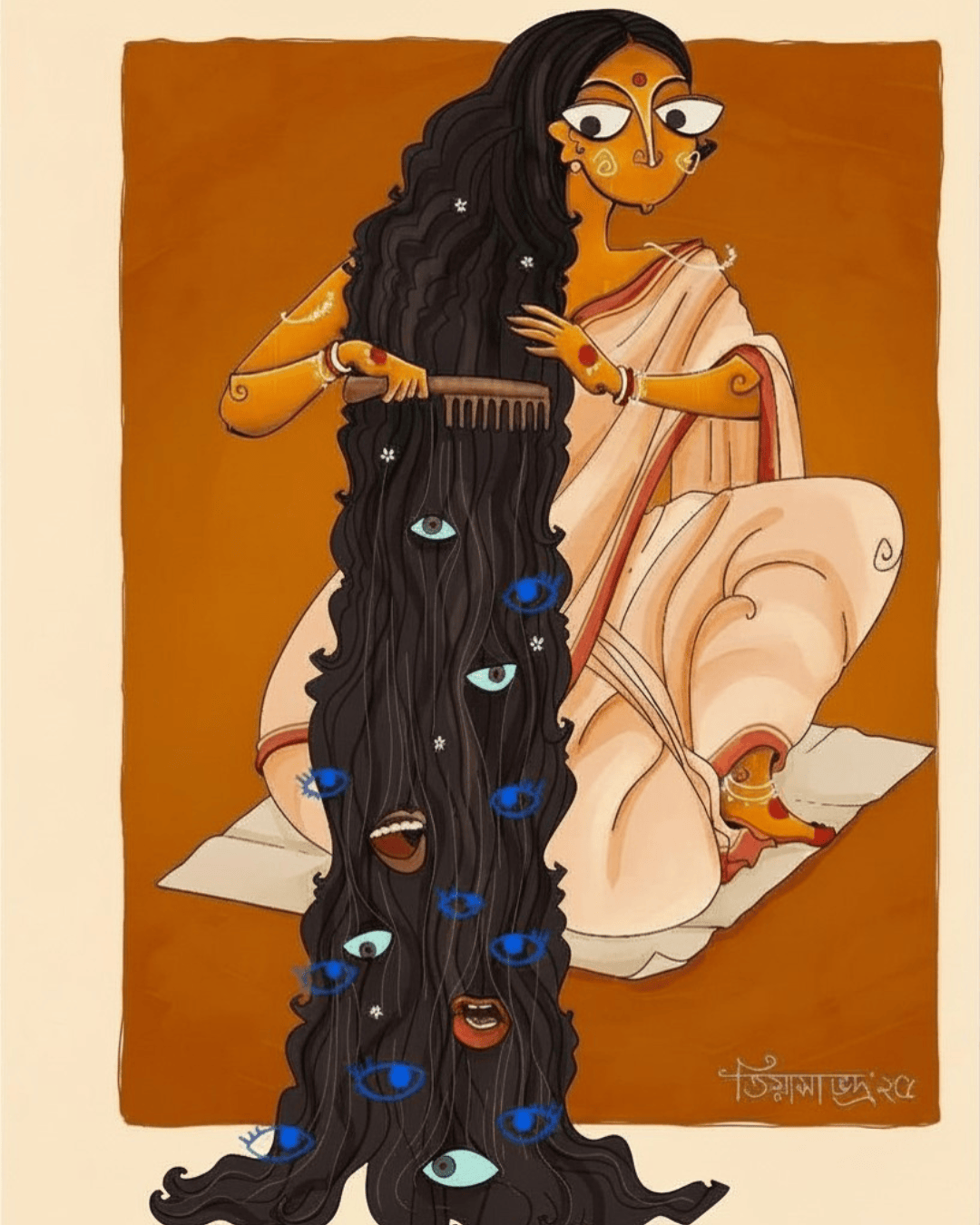
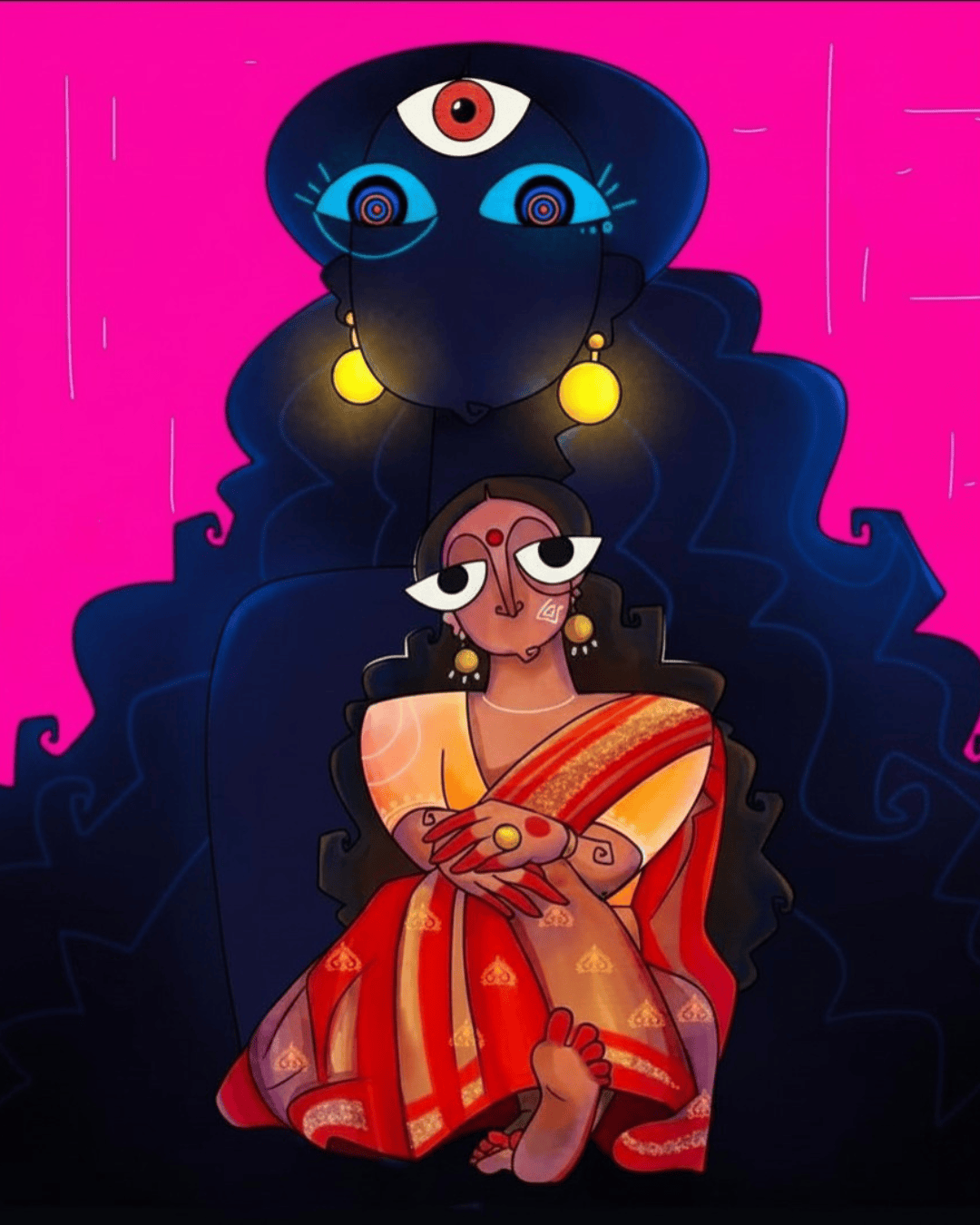
She is always watching, observing without judgement, just looking at all of us – the wide eyed Goddess from the streets of Kolkata. The character of the artist, Tiyasa, doesn’t have expressions, she just has big eyes and a very small mouth. She reminds us that we can only see truly when we stay detached, speak little and be more.
In every artwork of hers, we can see the Divine Feminine firmly established in her being and her power.
The Artist
She was walking on the streets of Kolkata when she saw her.. and her..and her.. draped in Sari styled in Bengali fashion. Once again long hair, big eyes and bold personality of these women caught her attention.This everyday look of Bengali women is inspired by the spiritual significance of the heritage of Bengal.
In Bengal, little girls are addressed lovingly as Ma by the parent figures of the family. They are believed to be manifestation of The Divine Feminine. The women embody the essence of Ma Durga and Ma Kali in Kolkata.
Perhaps the underlying consciousness of the city became the muse of The Artist – Tiyasa. Her paintings are not just pens put on the screen of iPad to draw some curves. Knowingly or unknowingly, Tiyasa is channelling the divine consciousness into this world through her paintings of Wide-Eyed Characters.
My signature characters with large eyes were never planned. They appeared repeatedly in my sketchbooks until they became part of my visual language.
– Tiyasa


Tiyasa’s journey is similar to all artists. She too has seen the days when her counterparts started landing their targeted jobs, making good money while she was still waiting for the validation of society as an artist.
Her heart was in art and no matter the daily fight with the inner and the outer world, she was determined to make sure that her heart always wins. We can see it in her artworks.
– From Editor’s Desk

ACHIEVEMENT UNEDITED……
One of the projects closest to my heart has been my desk calendars which has the English months and dates written in Bengali. In 2024, I launched the first edition with just 50 copies, which sold out entirely through pre-bookings a month before release.
Encouraged by the response, I released 100 copies in 2025, which found homes across India. In 2026, the stock grew even more and they too sold out completely. What makes this journey particularly meaningful is that most buyers have been Bengalis living outside West Bengal, who often tell me that the calendars help them feel connected to home.
Many non-Bengali customers have also purchased them as thoughtful gifts for their Bengali friends. Around the same time, I began shipping my art prints across India.
Seeing my work travel into homes, workspaces, and personal corners of people’s lives has brought me a deep sense of fulfilment— not just as an artist, but as someone trying to keep culture, language, and stories alive through art.
This is the art of of TriBhava Studio. And a snapshot from the story of the artist, Tiyasa Bhadra. Stay tuned for her upcoming works – Instagram: @tribhava_artstudio.